
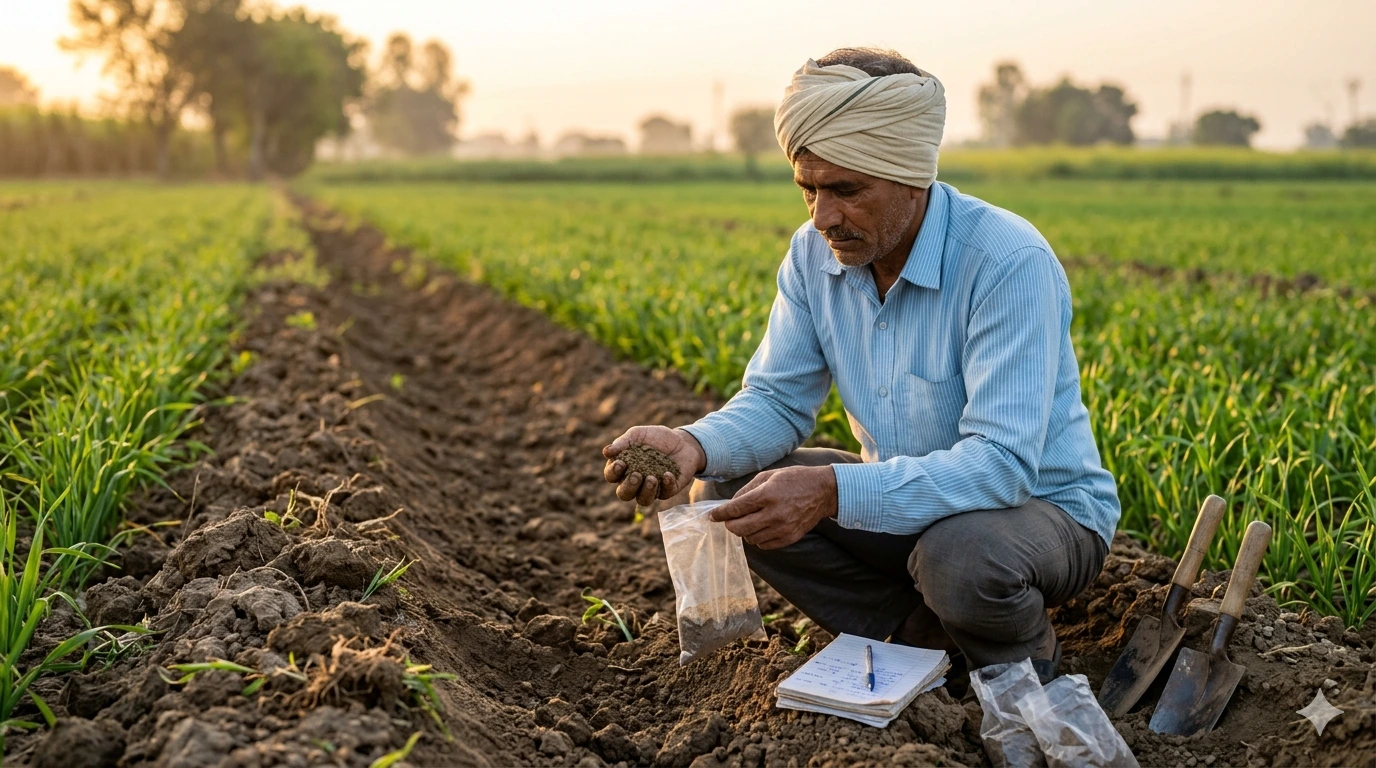
Soil Testing Before Sowing: What Every Farmer Should Know
Most farmers decide fertilizer use based on last season or what nearby farmers are doing. It feels practical, but it’s also risky.
Every field is different. Your soil has its own nutrient balance, pH level, and health condition. Guesswork often leads to wasted money and gradually declining yields.
Soil testing fixes this. It tells you exactly what your soil has, what it needs, and what it doesn’t.
Yet, many farmers in India still skip it, assuming it’s complicated or expensive. In reality, it’s simple, affordable, and one of the highest-return decisions you can make before sowing.
What is Soil Testing?
Soil testing is a laboratory analysis of a small sample taken from your field. The test reveals the nutrient status and overall health of your soil.
A standard soil test includes:
- NPK (Nitrogen, Phosphorus, Potassium): Primary nutrients essential for crop growth
- pH Level: Indicates whether soil is acidic, neutral, or alkaline (affects how well crops absorb nutrients)
- Organic Carbon: Shows soil fertility and organic matter content, which impacts soil health and water retention
- Micronutrients: Zinc, Boron, Sulphur, Iron, etc. that most farmers overlook but crops absolutely need
A basic test covers NPK and pH. A full profile test includes micronutrients and organic matter, giving you a much more complete picture crucial for long-term farming.
Why Soil Testing is Important Before Sowing in Agriculture
Skipping soil testing leads to blind fertilizer use and that directly affects yield and profit.
Here’s what happens without testing:
- Overuse of fertilizers like urea
- Ignoring hidden deficiencies (like zinc or boron)
- Higher input cost with lower output
Soil testing breaks this cycle.
Here's how it benefits:
1. Save Money on Fertilizers
If your soil already has enough phosphorus, you don't need DAP. Testing prevents unnecessary spending. It's one of the most reliable ways to reduce farming costs without compromising on yield.
2. Prevent Nutrient Deficiency
Low potassium or micronutrients can reduce yield significantly. Testing helps detect these deficiencies early before they damage your harvest.
3. Choose the Right Crop
Different crops prefer different pH levels. Knowing your soil helps you select crops that will actually thrive on your land.
4. Improve Water Efficiency
Soil with low organic matter drains too fast or holds water poorly. Once you know this, you can fix it which also improves your irrigation efficiency.
5. Maintain Long-Term Soil Health
Repeated over-fertilization degrades soil structure over years. Farmers who test regularly protect their land and maintain productivity over years.
Pairing soil health with proper biomass management further supports long-term productivity.
Best Time for Soil Testing
Timing matters if you want actionable results.
- Ideal time: 4–6 weeks before sowing
- Alternative: Immediately after harvest
This gives enough time to:
- Get the report
- Purchase the right inputs
- Apply soil amendments
How often should you test soil?
- Normal farming: Once every 2–3 years is sufficient
- Intensive farming: Growing multiple crops per year or using heavy inputs, testing every season gives you better control
How to Get Soil Testing Done in India
You have multiple options depending on budget and urgency:
1. Government Soil Health Card Scheme (Mitti Swasthya Patra)
The central government runs this scheme where farmers can get their soil tested for free and receive a Soil Health Card with nutrient recommendations.
- To apply, contact your nearest Krishi Vigyan Kendra (KVK) or agricultural department office.
Limitation:
- Longer wait times
- Limited customization: reports sometimes lack crop-specific or field-specific detail
2. Private Soil Testing Labs
Many districts now have private soil testing labs.
You collect a soil sample yourself, drop it at the lab, and receive your report.
- Faster results (3–7 days)
- More detailed reports
- Cost: ₹200–₹600 (depending on the tests included)
3. Full-Service Testing with On-Field Support
Organizations like Khetavya provide soil, water, and crop testing services that handle:
- Sample collection
- Lab testing
- Crop and land specific recommendations
Ideal if you want clear action plans, not just data.
Soil Testing Process (Step-by-Step)
- A sample is collected from multiple spots across your field (5 to 10 spots mixed together for accurate results)
- The sample is sent to a certified lab
- You receive a soil health report with nutrient levels and comparisons to ideal ranges
- Recommendations are given for fertilizer type, inputs, quantity, and timing
How to Read a Soil Test Report
Soil reports may look technical, but the key indicators are simple.
NPK Levels
Shown in kg per hectare or as low/medium/high ratings.
- Low Nitrogen: Use urea or nitrogen fertilizers
- High Phosphorus: Reduce or skip DAP
- Low Potassium: Add potash for root development
pH Level
Measured on a scale of 0 to 14.
- Ideal range: 6.0 to 7.5
- Below 6: Acidic → Add lime
- Above 7.5: Alkaline → Use gypsum or sulphur
Organic Carbon
Ideal: Above 0.75%
Low levels → Add organic matter like compost, manure, or crop residue
Micronutrients
Deficiencies in zinc, boron, iron, or sulphur often cause:
- Yellow leaves
- Poor grain filling
- Stunted growth
If your report has recommendations printed alongside the values, follow them crop by crop. If not, share the report with an agronomist or Khetavya's advisory team to translate it into an input plan.
What to Do After Getting Soil Testing Results
Getting the test done is only the first step. Action matters. Here's what to do after it:
1. Follow Recommended Fertilizer Doses
Avoid overuse "just to be safe". Over-application of nitrogen, for example, causes lush leafy growth but weak grain development, thus harming crop quality.
2. Adjust Crop Selection
Match crops to your soil type and pH level.
If your report shows highly alkaline soil, crops like wheat and cotton do better than groundnut or soybean.
Plan your crop calendar around your soil's natural strengths.
3. Improve Organic Matter
Mix in compost, well-rotted farmyard manure, or crop residues before sowing.
This improves soil structure, water retention, and microbial activity, all of which support better yields over time.
Proper post-harvest crop residue management also feeds back into soil organic matter over time.
4. Re-Test Regularly
Monitor improvements every 2–3 seasons.
This lets you track whether your inputs are improving the soil or depleting it further.
Farmers who do this consistently see a clear improvement in both soil health and profitability.
Common Myths About Soil Testing
"My land has always performed well, no need to test."
A field that has performed well for years is often masking slow nutrient depletion. Yields gradually decline and farmers assume it's the weather or seed quality. Often it's the soil. Testing helps catch issues early.
"Soil testing is only for big farms."
A 1-acre field and a 50-acre farm benefit equally from knowing what the soil needs. In fact, small farmers who can't afford to waste money on unnecessary inputs gain the most from testing.
"Soil Health Card is enough."
The Soil Health Card scheme is a good starting point, but the reports are often generic and not crop-specific. For serious planning, a detailed private or full-service test gives you more actionable data.
"Soil testing is expensive."
A basic soil test costs less than one bag of fertilizer you might not even need. The savings from applying only what your soil actually requires typically pay for the test many times over in a single season.
Before You Sow, Know Your Soil
Soil testing is not an extra step, it’s the first and most important step before sowing.
When you understand your soil:
- You spend less
- You grow more
- You protect your land for future seasons
Once your crop is growing strong, make sure you're also set up to sell your produce directly and get the best price for your efforts.
Before your next crop cycle, take one simple step: test your soil. It takes less than an hour but can give clarity to your farming decisions.
Get Expert Soil Testing Support
Khetavya offers:
- Soil, water, and crop testing
- On-field sample collection
- Clear, crop-specific recommendations
Make sure every input you buy is exactly what your soil needs, nothing more, nothing less.