
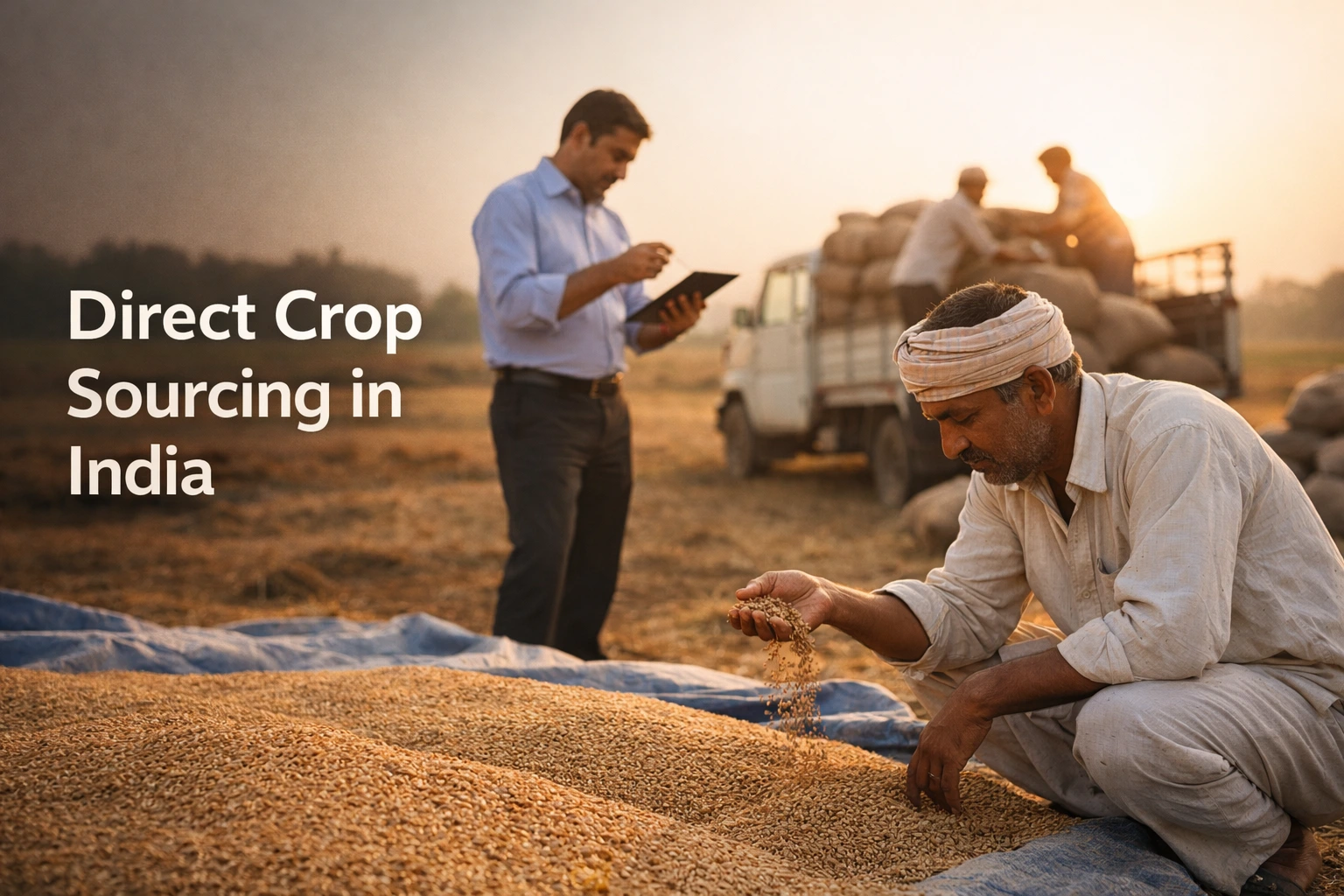
How Agri Buyers Can Procure Crops Directly from Farmers in India
India’s agricultural supply chain is changing. More agri buyers, food processors, exporters, and retail brands are now looking to source crops directly from farmers in India instead of relying only on traditional mandi systems.
The reason is simple: direct farm sourcing offers better price control, improved quality consistency, and stronger long-term relationships. But while the idea sounds straightforward, the actual crop procurement process requires planning, coordination, and trust.
This blog explains how agricultural procurement companies can buy crops directly from farmers in a practical and sustainable way.
Why Direct Farm Sourcing is Increasing in India
For decades, most crop buying happened through mandis and commission agents. While this system works, it also involves multiple intermediaries, price fluctuations, and limited visibility into quality at the farm level.
Today, buyers want:
- Better traceability
- Consistent quality standards
- Stable pricing models
- Reliable bulk supply
- Direct communication with producers
Government reforms in recent years have also made it easier in many states to engage in contract farming or direct procurement agreements. As a result, the farm-to-business supply chain model is becoming more common.
Traditional Mandi Procurement vs Direct Farm Sourcing
Understanding the difference helps buyers decide what approach suits them.
Traditional Mandi Model |
Direct Farm Sourcing |
| Multiple intermediaries |
Direct farmer agreements |
| Price discovered daily |
Pre-discussed pricing |
| Limited traceability |
Transparent sourcing |
| Quality checked at market |
Quality defined at farm level |
| Short-term transactions |
Long-term partnerships |
Direct sourcing does not mean eliminating markets entirely. Many buyers use a hybrid model: part contract farming, part open market purchase.
Many agricultural procurement companies prefer structured partnerships instead of building farmer networks independently. You can explore our agri buyers and crop procurement partnerships to understand how collaboration works in practice.
Step-by-Step Procurement Process to Source Crops Directly from Farmers
Direct crop procurement works best when it follows a structured process.
1. Identify Crop, Volume and Region
Start with clarity:
- What crop are you sourcing?
- What grade or quality is required?
- What monthly or seasonal volume is needed?
- Which states or districts produce this crop reliably?
For example, if sourcing maize in bulk, identify regions with stable production and transport access.
2. Build or Access a Farmer Network
One of the biggest challenges in India is fragmented land holdings. Most farmers operate on small plots.
To solve this, buyers can:
- Partner with farmer producer organizations (FPOs)
- Work with local aggregators
- Use a farmer aggregation platform
- Collaborate with companies that already have verified farmer networks
Building this network independently takes time. Many agricultural procurement companies prefer partnerships to reduce risk.
3. Define Quality Standards Clearly
Quality confusion causes most disputes in direct sourcing.
Before sowing season (in contract farming) or before harvest (in open procurement), clearly define:
- Moisture levels
- Grain size
- Permissible damage percentage
- Sorting and grading norms
- Packaging requirements
Put these in writing. When farmers know expectations early, rejection rates drop significantly.
4. Choose Between Contract Farming and Spot Buying
There are two main approaches:
Contract Farming
- Agreement signed before sowing
- Input support may be provided
- Pre-agreed price or formula-based pricing
- Higher supply stability
Get detailed insights into what is contract farming.
Spot Procurement
- Buying after harvest
- Price based on market rates
- More flexibility but less predictability
Many bulk crop buyers in India use a mix of both to balance risk.
5. Plan Logistics and Storage
Even if procurement is smooth, weak logistics can cause losses.
Important considerations:
- Collection centers near farms
- Transportation scheduling
- Cold storage (if required)
- Warehouse tie-ups
- Moisture control
Without logistics planning, direct farm sourcing becomes inefficient.
6. Ensure Transparent Payment Systems
Timely payment builds trust.
Options include:
- Direct bank transfer
- Payment within fixed days of delivery
- Advance payment in contract farming
Clear documentation reduces disputes and strengthens long-term relationships.
Common Challenges in Direct Crop Procurement
While direct sourcing has benefits, it also has challenges.
- Fragmented Farmer Base: India has millions of small farmers. Coordinating individually is difficult without aggregation.
- Price Volatility: Agricultural prices fluctuate due to weather, demand, and export policies.
- Supply Inconsistency: Crop yields vary based on rainfall and input usage.
- Quality Variation: Even within the same village, quality may differ between farms.
- Legal and Contract Issues: Clear documentation is important, especially in contract farming agreements.
Recognizing these challenges early helps buyers plan better.
Ways to Solve Challenges in Crop Procurement in Agriculture
Direct sourcing becomes easier when systems are in place.
- Work With Aggregated Networks: Partnering with organizations that already manage farmer clusters reduces coordination effort.
- Use Data for Planning: Forecast demand and align procurement schedules with harvest cycles.
- Standardize Grading at Collection Points: On-ground quality testing reduces post-delivery rejection.
- Diversify Regions: Avoid depending on a single district or state.
- Build Long-Term Relationships: When farmers trust buyers, supply reliability improves naturally.
Many agri buyers choose to collaborate with platforms that connect them to verified farmer networks and manage coordination, reducing operational burden.
Role of Digital Platforms in Agricultural Procurement
Technology is quietly reshaping agricultural procurement in India.
Many buyers now work with digital platforms that help with:
- Farmer onboarding
- Demand-supply matching
- Crop tracking
- Quality documentation
- Payment management
For buyers, this improves visibility and reduces uncertainty. For farmers, it creates predictable demand.
You can also explore our agri-tech collaboration opportunities to see how technology partnerships support modern farm sourcing.
The shift toward digital tools is especially visible in bulk procurement for food processing, exports, and retail supply chains.
Industries That Benefit Most from Direct Farm Sourcing
Direct procurement is especially useful for:
- Food processing companies
- Export houses
- FMCG brands
- Institutional buyers
- Retail chains
- HoReCa suppliers
These businesses require consistent quality and large volumes, which structured direct sourcing can provide.
Checklist Before Starting Direct Farm Procurement
Before entering into agreements, agri buyers should check:
- Verified farmer network or FPO support
- Clear quality specifications
- Legal contract framework
- Collection and storage infrastructure
- Transparent pricing model
- Payment process clarity
- Risk mitigation plan for crop failure
A well-prepared buyer avoids most operational problems.
Is It Legal to Buy Crops Directly from Farmers in India?
In most states, direct procurement is allowed, especially after recent reforms. However, regulations can vary by state and crop.
Buyers should:
- Understand local agricultural marketing laws
- Ensure proper documentation
- Register contracts where required
Legal clarity protects both farmers and buyers.
Building a Stable Farm-to-Business Supply Chain
Direct farm sourcing is not just about reducing middlemen. It is about building stable and transparent relationships within the agricultural supply chain.
When done correctly, it offers:
- Better price control
- Improved quality consistency
- Stronger farmer relationships
- Long-term supply security
However, it requires structured planning, reliable partnerships, and clear communication.
For agri buyers looking to scale bulk crop buying in India, collaborating with established farmer networks and procurement support systems like Khetavya can simplify the process and reduce operational risk.
Direct sourcing works best when it focuses on fairness, clarity, and long-term thinking, not just short-term pricing advantages.