
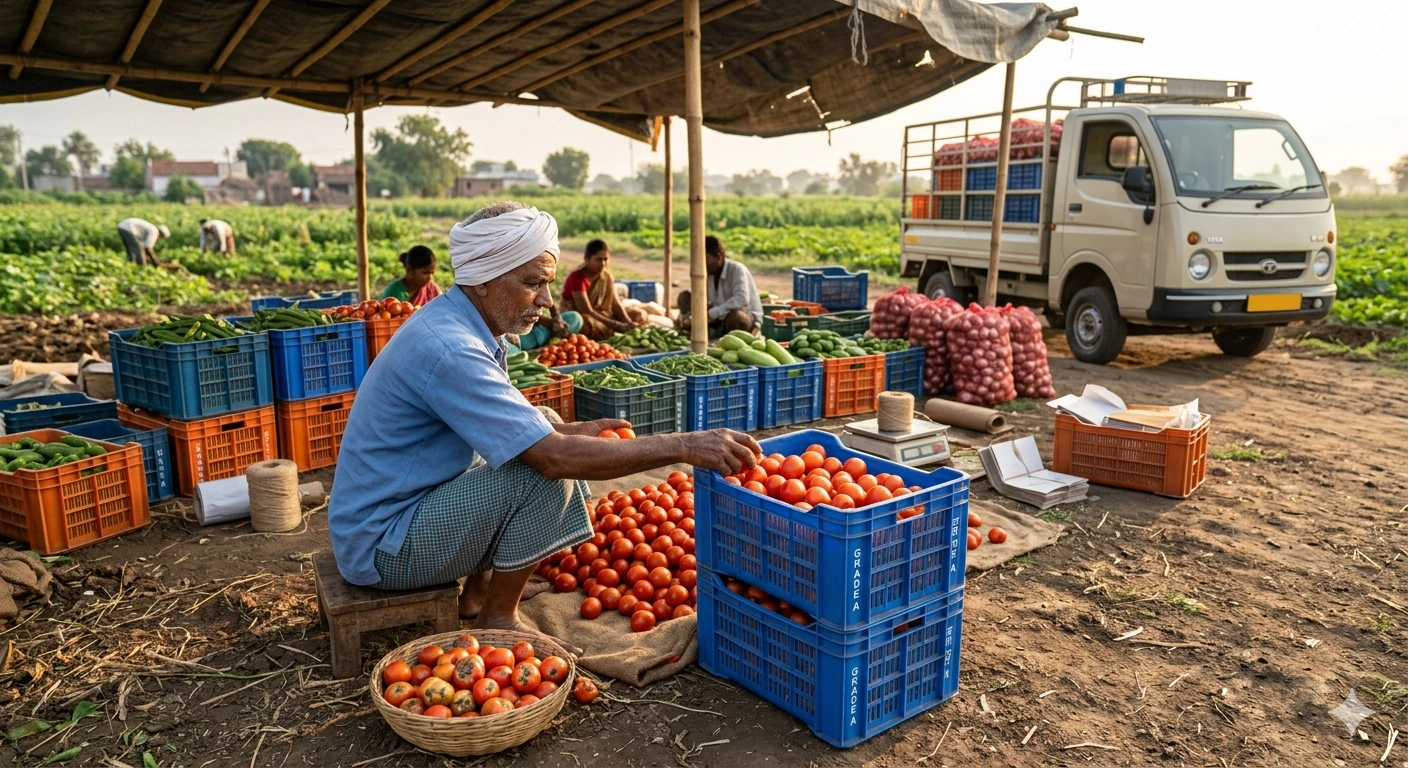
How to Reduce Post-Harvest Losses: Storage, Grading & Packaging for Farmers
You put months of hard work into your crop: early mornings, unpredictable weather, and rising input costs. Finally, harvest day arrives.
But here’s the harsh reality: a significant portion of your produce is lost after harvest before it even reaches the buyer.
India loses nearly 15–20% of agricultural produce every year due to poor post-harvest handling. For fruits and vegetables, losses can be even higher.
This isn’t just a statistic, it’s lost income.
The good news? Most of these losses are preventable. You don’t always need expensive technology. Simple improvements in post-harvest management like storage, grading, and packaging methods can significantly reduce crop wastage and increase your earnings.
Why Do Post-Harvest Losses Happen?
Losses often begin right in the field due to:
- Harvesting too early or too late
- Rough handling causing bruises and cuts
- Exposure to sunlight and heat
- Poor storage conditions (moisture, pests, lack of ventilation)
- Mixing damaged produce with fresh stock
Key insight: The longer produce is left unmanaged, the faster it loses value.
Practical Steps to Reduce Post-Harvest Losses
Small improvements at each stage can make a big difference. Here’s what you can do:
1. Smart Storage Techniques (Even Without Cold Storage)
Most farmers don’t have access to cold storage, but effective storage is still possible.
Move produce to shade immediately after harvest
Direct sunlight raises temperature quickly and speeds up spoilage. Even a simple tarpaulin sheet can help.
Use ventilated containers
Avoid plastic sacks because they trap heat and moisture.
Instead, use:
- Plastic crates
- Bamboo baskets
These allow better airflow, especially for fruits and vegetables.
Dry grains before storage
Grains stored with high moisture content develop fungus and attract pests.
Maintain proper moisture levels:
- Wheat and rice: 12–14% moisture
Use hermetic storage bags
- Airtight bags cut off oxygen, prevents pest infestation without chemicals
- Blocks moisture entry
- Reusable and cost-effective
Ideal for long-term grain storage
Explore local cold storage options
For perishables like vegetables, fruits, or flowers, cold storage makes a real difference.
Many districts now have government-supported cold storage facilities. Ask your local KVK or agriculture department about what's available near you.
2. Grading: Increase Income from the Same Crop
Many farmers overlook grading but it can directly increase income.
Graded produce can earn 20–40% higher prices for the same crop.
Why grading matters:
- Buyers prefer uniform size and quality
- Builds trust and repeat demand
- Makes pricing and bulk selling easier
Simple Grading System:
Grading simply means separating your produce by size, colour, and damage level.
- Grade A: High quality (uniform, clean, undamaged)
- Grade B: Average quality
- Grade C: Damaged or undersized
Practical Tips:
- Remove damaged produce immediately
- Sort by size, color, and quality
- Use manual grading for small quantities
- Rent grading machines from Custom Hiring Centres (CHCs) for bulk produce
Important: Damaged items spread rot quickly, removing them early protects the rest of your stock.
3. Proper Packaging: Protect Your Profit
Once your produce is graded, the next step is protecting it during handling and transport.
Good packaging isn’t an expense, it’s protection for your income.
Crop-wise Packaging Guide:
- Grains: Use HDPE woven bags or hermetic bags for storage; avoid overfilling gunny bags
- Vegetables (onion, tomato, potato): Use ventilated mesh bags or plastic crates; avoid solid sacks
- Fruits: Use foam nets to prevent bruising and corrugated boxes for long-distance transport
- Leafy vegetables: Use perforated bags or damp newspaper wrapping to help retain freshness
Golden Rules for Packaging:
- Never fill containers more than 80%
- Prevent crushing damage
- Add simple labels (name, crop, weight) to build buyer trust
This matters especially if you're selling directly without a middleman.
Consistent quality and proper labelling is also what direct crop sourcing buyers look for when choosing farmers for repeat procurement.
4. Transport Smart: Avoid Last-Minute Losses
Even after proper storage and packaging, poor transport can reduce your profits.
Pre-cool produce before loading
Let produce rest in a shaded, cool area before transport. Loading warm produce into closed vehicles accelerates spoilage.
Avoid overloading vehicles
Extra weight leads to crushing damage at the bottom and affects the whole batch's market value.
More load = more damage = lower price.
Use refrigerated transport when needed
For long-distance transport of fruits, vegetables, and flowers, refrigerated vehicles can significantly reduce losses.
Understanding how transport and logistics affect your final earnings can help you make better decisions on when refrigerated transport is actually worth the cost.
Often, the cost of transport is less than the value of produce saved.
Government Schemes for Post-Harvest Management
You don’t have to invest everything yourself. Several government schemes can help:
PM FME Scheme
- Financial support for small food processing units
- Helps with packaging and value addition
MIDH (Mission for Integrated Development of Horticulture)
MIDH offers subsidies for:
- Cold storage
- Pack houses
- Grading units
NABARD
- Support Loans and subsidies for FPOs and agricultural cooperatives
- Helps build shared infrastructure like cold storage and pack houses
Contact your local agriculture department or KVK to find out which schemes are available in your area and how to apply. Combining these schemes with strategies to reduce overall farming costs can meaningfully improve your net income season after season.
Key Takeaways
- Post-harvest losses directly reduce farmer income
- Small improvements can save 15–20% of produce
- Grading can increase prices by up to 40%
- Proper packaging and transport prevent last-mile damage
Reduce Post-Harvest Losses and Maximize Farm Profits
Growing a good crop is only half the journey.
The real profit depends on how well you manage it after harvest.
Start small:
- Store in shade
- Sort immediately
- Use better packaging
These simple steps can significantly improve your income.
Want Better Prices for Your Crop?
Khetavya helps farmers reduce post-harvest losses through:
- Better handling practices
- Efficient transport and logistics
- Direct connections with buyers
So your hard work in the field turns into real earnings.