
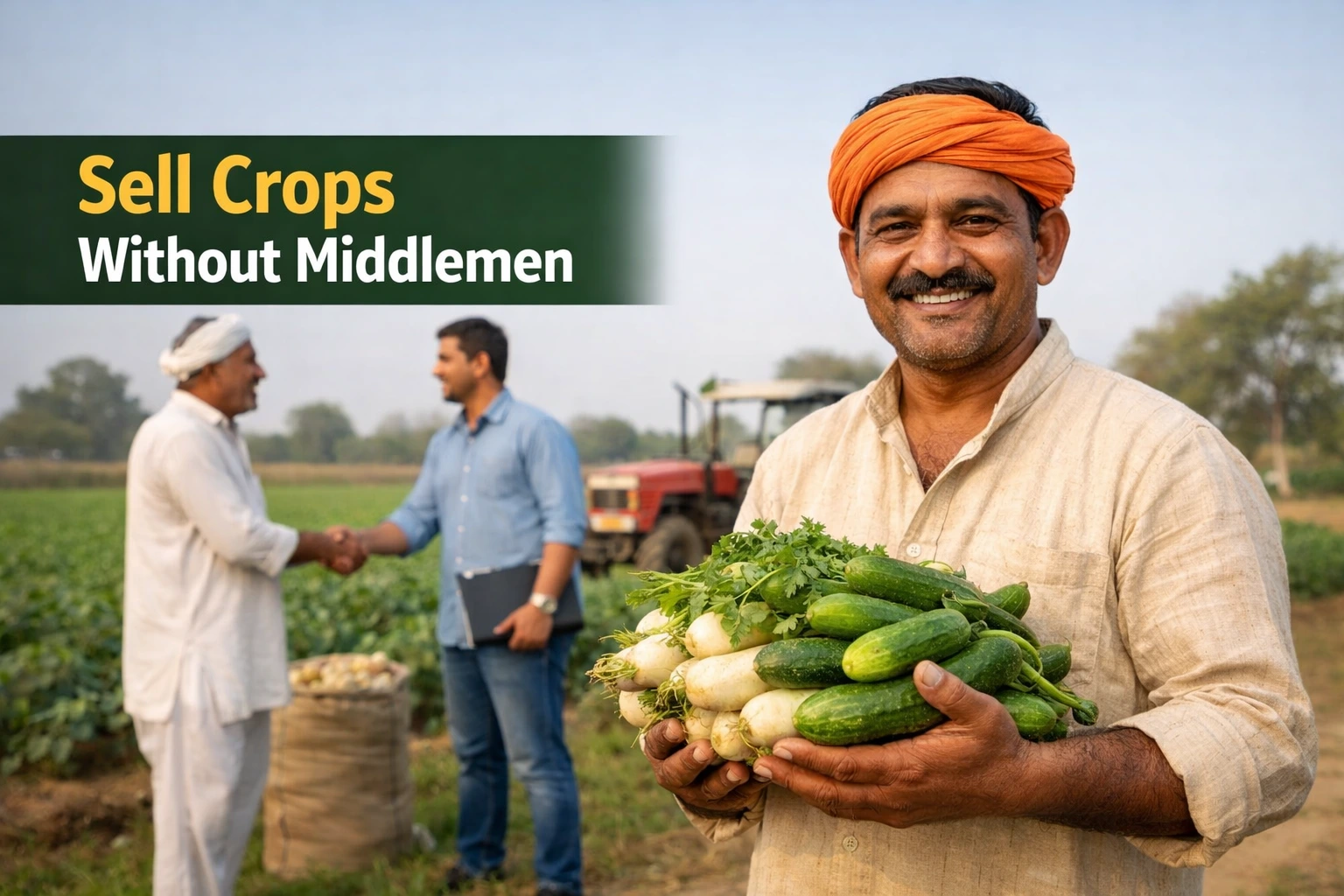
How to Sell Crops Directly Without Middlemen: Tips & Strategies for Farmers
For many Indian farmers, selling crops is often more stressful than growing them. Even after months of hard work in the field, profits are reduced because middlemen control prices, delay payments, or deduct unexpected charges. This is why more farmers today are looking for ways to sell their crops directly to buyers.
Direct selling is not about cutting corners. It is about getting a fair price, timely payment, and better control over your produce. In this guide, we explain how farmers in India can sell crops directly without middlemen, the challenges involved, and how organized support can make the process easier.
Key Reasons Why Indian Farmers Want to Avoid Middlemen
In the traditional system, most farmers sell their produce through local traders, commission agents, or mandis. While this system is familiar, it comes with common problems:
- Prices are often decided by traders, not farmers
- Payments may be delayed by days or weeks
- Deductions for weighing, handling, or transport are unclear
- Farmers have little visibility into market demand
- Over time, this reduces profit and increases dependency.
Direct selling gives farmers more transparency and control, especially when supported by reliable service providers.
What Does Direct Crop Selling Mean?
Direct selling means selling your produce straight to the buyer without unnecessary intermediaries. These buyers can include:
- Food processing companies
- Bulk buyers and wholesalers
- Retail chains
- Exporters
- Organized agri platforms and aggregators
This method works well for crops like grains, pulses, oilseeds, vegetables, fruits, and cash crops when quality and quantity are consistent.
Direct selling does not mean farmers have to manage everything alone. With the right support, farmers can focus on production while logistics, buyer connections, and documentation are handled professionally.
Preparing Your Crop for Direct Sale
Before approaching buyers, it is important to prepare your produce properly. Buyers who purchase directly expect consistency and quality.
Key steps farmers should follow:
- Harvest crops at the right maturity stage
- Remove damaged or low-quality produce
- Grade and sort according to size and quality
- Use proper storage to avoid moisture or pest damage
Clean, well-sorted produce always attracts better prices. Even small improvements in handling can make a big difference during negotiations.
How to Find the Right Buyers in Agriculture Market
One of the biggest challenges farmers face is identifying genuine buyers. Not all buyers who promise high prices are reliable.
Farmers can explore options such as:
- Selling through organized agri service providers
- Joining farmer groups or FPOs
- Connecting with processors and bulk buyers
- Using trusted platforms instead of random contacts
Khetavya helps farmers connect with verified buyers and structured markets. This reduces the risk of fraud and ensures that farmers deal with serious buyers who understand crop quality and volume requirements.
Understanding and Negotiating Crop Prices
Before selling directly, farmers should be aware of current market rates. Prices depend on several factors like crop quality and grading, quantity available, market demand at the time of sale and transport distance and timing.
- Checking mandi prices, local market trends, and buyer demand helps farmers negotiate confidently.
- Avoid rushing into deals without understanding the actual value of your produce.
When farmers sell through organized channels, pricing discussions are clearer and based on market logic rather than guesswork.
Managing Transport and Logistics
Transport is one of the most critical parts of direct crop selling. Even high-quality produce can lose value if logistics are poorly planned.
Common challenges include:
- Delays during pickup
- Damage during loading and unloading
- High transport costs
- Lack of coordination during peak seasons
Proper logistics planning ensures crops reach buyers on time and in good condition. Khetavya provides transport and logistics support that helps farmers move produce efficiently from farm to buyer, reducing losses and delays.
Handling Payments and Basic Documentation
One reason farmers hesitate to sell directly is concern about payments. Clear payment terms are essential.
Farmers should ensure:
- Payment timelines are discussed in advance
- Mode of payment is agreed upon
- Basic sale records are maintained
- Receipts or confirmations are received
When selling through organized service providers, payment processes are more structured and transparent, reducing the risk of delays or disputes.
Benefits of Selling Crops Without Middlemen in Indian Agriculture Market
Farmers who successfully sell directly experience several advantages:
- Better price realization
- Faster and more predictable payments
- Direct communication with buyers
- Reduced dependency on local traders
Over time, direct selling also helps farmers understand market demand better and plan crops more efficiently.
Common Challenges and How to Overcome Them
Direct selling is beneficial, but it comes with challenges, especially for first-time sellers.
Some common issues include:
- Difficulty finding consistent buyers
- Managing logistics during peak harvest
- Understanding buyer quality standards
- Handling negotiations and documentation
These challenges can be managed with proper guidance. Khetavya offers end-to-end support from buyer connections and logistics to agricultural advisory services so farmers do not have to handle everything on their own.
How Khetavya Supports Direct Crop Selling
Khetavya works closely with farmers to simplify direct crop selling. Support includes:
- Connecting farmers with verified buyers
- Providing transport and logistics services
- Advising on pricing and crop readiness
- Supporting smoother farm-to-market movement
This structured approach helps farmers sell confidently without relying on traditional middlemen.
Practical Tips for Farmers New to Direct Selling
If you are planning to sell directly for the first time, keep these tips in mind:
- Start with a small quantity and scale gradually
- Focus on crop quality and consistency
- Keep simple records of buyers and payments
- Build long-term relationships instead of one-time deals
Direct selling is not a one-day change. It improves steadily with experience and the right support.
Final Thoughts on Direct Crop Selling
Selling crops directly without middlemen is becoming more practical for Indian farmers. With better access to buyers, transport services, and advisory support, farmers can earn fair prices and reduce uncertainty.
The key is preparation, awareness, and choosing the right partners. With services like those offered by Khetavya, farmers can move closer to a more transparent, reliable, and profitable way of selling their produce.