
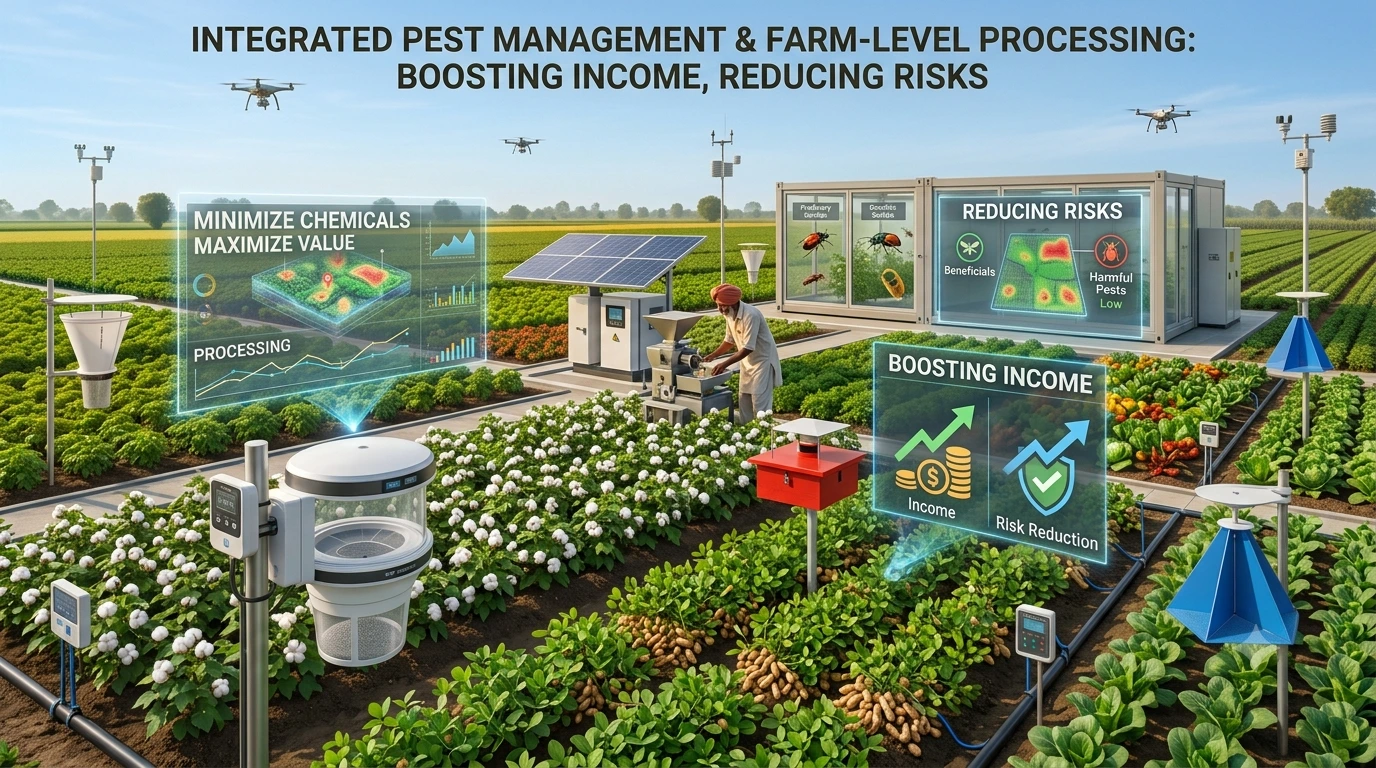
Integrated Pest Management (IPM): Reduce Chemical Use and Crop Protection Costs
Protecting crops can become a significant expense for many farmers. Spraying on a fixed schedule or simply because nearby farmers are spraying can increase chemical and labour costs without always improving crop protection.
Repeated and unnecessary pesticide use can also:
- Encourage pest resistance
- Harm beneficial insects such as ladybirds, spiders and parasitic wasps
- Increase the risk of pesticide residues
- Increase exposure risks for farmers and farm workers
- Add unnecessary costs to crop production
Integrated Pest Management (IPM) offers a more practical approach. Instead of spraying by habit, monitor the crop, prevent problems where possible, and intervene only when pest pressure justifies action.
What is Integrated Pest Management (IPM)?
IPM is a crop protection approach that combines cultural, biological, mechanical, physical and chemical methods to keep pests below economically damaging levels.
The objective is not to eliminate every insect. Some insects can be present without causing meaningful economic loss.
A key IPM concept is the Economic Threshold Level (ETL), the pest level at which control action becomes economically justified. Instead of spraying simply because pests are present, farmers monitor pest populations and consider whether the likely crop loss is greater than the cost of treatment.
The IPM Approach
- Prevent → Monitor → Identify → Control → Review
Start with the least disruptive method and move to other measures when monitoring shows they are necessary.
6 Key Steps of Integrated Pest Management
1. Prevention: Start Before Pests Arrive
Prevention is usually the most economical part of IPM and works before pests arrive.
- Choose suitable varieties: Select locally recommended varieties with tolerance or resistance to important pests and diseases where available.
- Use quality seed: Certified or tested seed reduces the risk of introducing diseases. See our guide on identifying fake seeds and fertilizers.
- Test your soil: Balanced nutrition supports healthier crops. Excess nitrogen, for example, can sometimes encourage certain sucking pests. Read why soil testing before sowing matters.
- Rotate crops: Growing the same crop repeatedly lets its pests and diseases build up in the soil. Rotation breaks the cycle. Read more related to crop diversification.
- Sow at the recommended time: Proper sowing windows can help crops avoid periods of high pest pressure.
- Remove sources of infestation: Manage weeds, infected plants and crop residues that can harbour pests and diseases.
- Use summer ploughing where recommended: Exposing soil to heat can help reduce certain soil-borne pests and disease stages.
2. Seed and Soil Treatment Where Needed
Treating seed before sowing is a low-cost step that protects the crop during its most vulnerable stage.
Depending on the crop and local recommendations:
- Treat seed with an appropriate fungicide or biological agent such as Trichoderma to help manage seed- and soil-borne diseases.
- In termite-prone areas, follow recommendations from your local agriculture department or agricultural university for suitable seed or soil treatment.
Avoid treating every problem the same way. The treatment should match the crop, pest or disease and local recommendation.
3. Monitor and Scout Your Field
Monitoring is the foundation of IPM and it costs very little.
Walk through the field regularly, preferably once or twice a week during periods of pest risk.
Inspect:
- Undersides of leaves
- Growing points and young shoots
- Stems and flowers
- Roots or soil around affected plants
- Areas showing unusual damage
Walk in a zigzag pattern rather than checking only the field edges.
Use simple traps:
- Pheromone traps: Help monitor specific moth pests such as bollworms and fall armyworm.
- Yellow sticky traps: Useful for monitoring pests such as whiteflies, aphids and leafhoppers.
- Light traps: Can help monitor certain night-flying insects.
Keep a simple record of the date, pest, approximate population and crop stage. These records become increasingly useful from one season to the next.
4. Protect and Use Natural Enemies
Your field already has pest-control agents working for you.
- Protect natural enemies: Beneficial organisms such as ladybird beetles, lacewings, spiders, and parasitic wasps feed on pests. Avoid broad-spectrum sprays that kill them.
- Release bio-agents: Trichogramma egg parasitoids are widely used against borers and caterpillars in crops such as sugarcane, cotton, and vegetables.
- Use bio-pesticides: Neem-based products, Bacillus thuringiensis (Bt), and Beauveria bassiana are examples of options that target pests with less harm to beneficial insects.
- Trap or border crops can also be used in suitable situations to attract or divert certain pests away from the main crop.
5. Mechanical and Physical Control
Simple physical methods can be effective, particularly in smaller fields or when infestations are localized.
- Hand-pick large caterpillars and egg masses where practical.
- Remove and destroy heavily infected plant parts.
- Remove severely affected plants when recommended.
- Install bird perches to encourage insect-feeding birds.
- Use appropriate physical barriers or traps for specific pests.
These methods can reduce pest populations without immediately resorting to pesticides.
6. Use Pesticides Responsibly (The Last Resort)
Chemical control remains an important part of IPM when pest populations reach economically important levels and other measures are insufficient.
Before spraying:
- Identify the pest correctly. Misidentification can waste both money and chemicals.
- Confirm that treatment is justified. Use local ETL or advisory recommendations where available.
- Choose a registered product recommended for the specific crop and pest.
- Follow the label for dose, application method, safety precautions and pre-harvest interval.
- Rotate pesticide groups according to resistance-management recommendations rather than repeatedly using the same mode of action.
- Use appropriate protective equipment such as gloves, protective clothing and other label-recommended PPE.
- Avoid spraying when weather conditions could reduce effectiveness or increase drift/runoff.
For crop- and region-specific recommendations, consult your Krishi Vigyan Kendra (KVK), state agriculture department or agricultural university.
IPM Starting Points for Common Rabi Crops
Pest pressure varies by region, weather and crop stage, so these are starting points rather than universal spray recommendations.
Crop |
Common Problems |
IPM Starting Points |
|---|---|---|
| Wheat | Termites, aphids, rust | Use quality seed, suitable varieties, balanced nutrition and regular scouting. |
| Mustard | Aphids, painted bug, white rust | Sow on time (early sowing can help escape aphid peak), use yellow sticky traps, spray only when aphid counts cross the threshold |
| Chickpea | Pod borer, wilt | Treat seed with Trichoderma, use wilt-tolerant varieties, install pheromone traps, use bird perches, consider HaNPV or Bt-based products |
| Potato | Late blight, aphids | Use healthy seed tubers, monitor weather for blight-favourable conditions, spray protectively only when risk is high |
How Much Can IPM Save?
There is no single percentage saving that applies to every farm. The result depends on the crop, region, pest pressure, existing spray programme, labour costs and pesticide prices.
Potential savings can come from:
- Fewer unnecessary pesticide applications.
- Lower chemical and spraying labour costs.
- Reduced resistance-related expenses.
- Earlier detection of pest problems.
- Better protection of beneficial insects.
The easiest way to measure your own savings is to record crop-protection costs per acre this season and compare them with previous seasons.
A Simple 5-Step IPM Plan
- Prepare: Test your soil and choose suitable seed and varieties.
- Prevent: Treat seed and follow good crop-management practices.
- Monitor: Scout your field every week and use appropriate traps.
- Identify: Confirm the pest before deciding on control.
- Record: Track pests, treatments, costs and results.
A simple farm diary can help you identify recurring pest problems and avoid unnecessary applications in future seasons.
Where Farmers Can Get Help
For local pest identification and crop-protection recommendations, farmers can contact:
- Krishi Vigyan Kendras (KVKs) for free advice and training in most districts
- State agriculture department and extension officers
- State agricultural universities for region-specific pest advisories
- Kisan Call Centre: 1800-180-1551
- Local government-supported plant protection and IPM programmes: Ask your agriculture office about training and support available in your state.
Because pest thresholds and pesticide recommendations can vary by crop, pest, region and season, local agricultural advisories should take priority over generic spray schedules.
Key Takeaways
- Monitor before you spray.
- Prevention is often cheaper than controlling an established infestation.
- Learn to identify both pests and beneficial insects.
- Use ETL-based decisions instead of routine spraying.
- Combine cultural, biological, mechanical and chemical methods.
- When pesticides are necessary, use the right product, dose, timing and safety measures.
- Keep records so you can measure your crop-protection costs and improve your IPM strategy each season.
Protect Your Crop, Reduce Your Costs
Integrated Pest Management is not about avoiding pesticides completely. It is about using the right control method at the right time and only when necessary. By combining prevention, regular monitoring, biological control and responsible chemical use, farmers can protect their crops while managing input costs.
Khetavya helps farmers access practical, easy-to-understand agricultural information so they can make more informed decisions throughout the crop cycle. From soil testing and crop diversification to crop protection and farm management, explore more farming resources.