
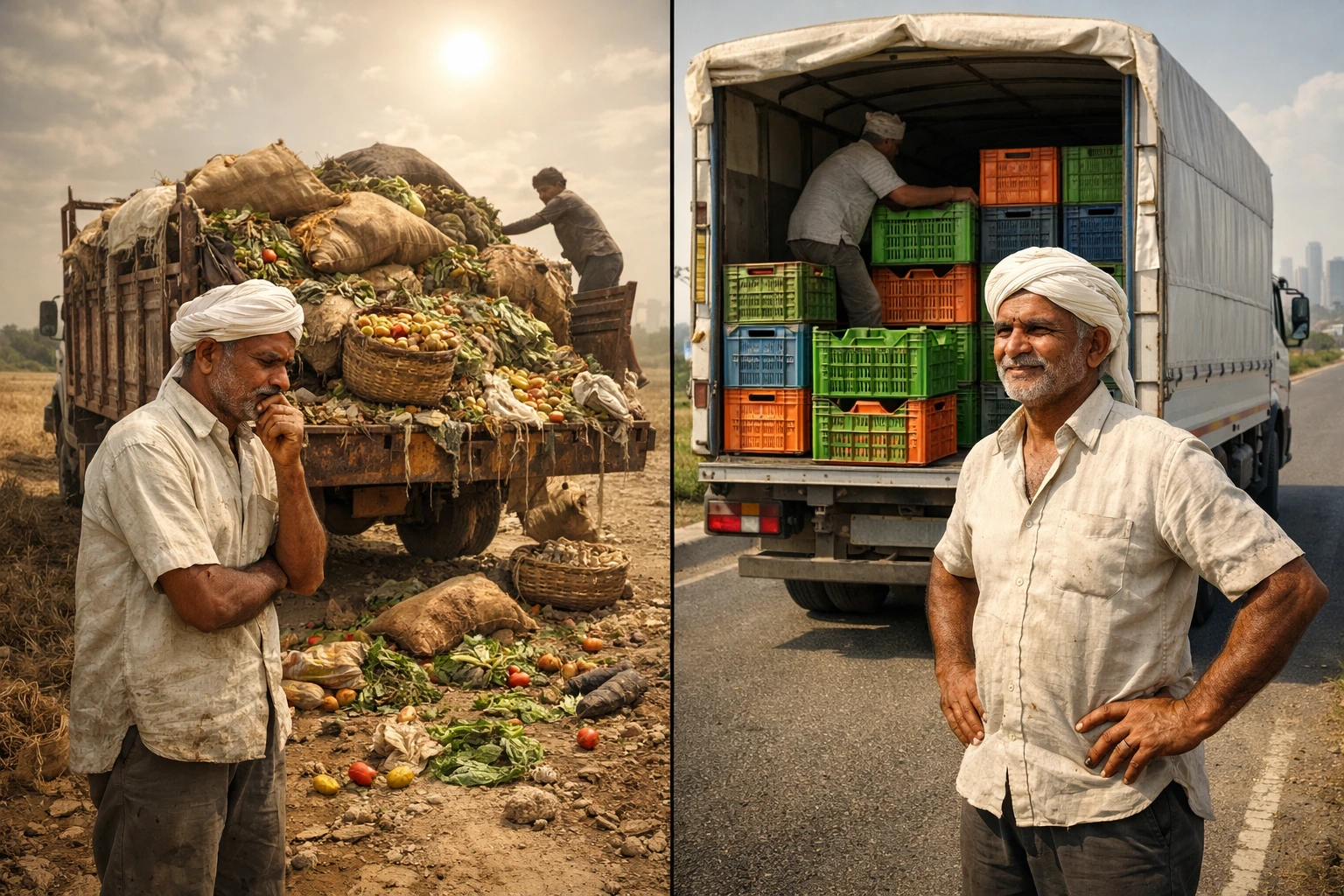
How Agricultural Transport and Logistics Affects Farmer Profits
Imagine this: A farmer in Gujarat works hard for four months. The soil is prepared, seeds are sown, crops are watered, and finally, the harvest is ready. Everything looks good. But when the money arrives, it is far less than expected. Why?
Often, the answer is not the crop. It is the journey the crop takes after harvest.
In India, post-harvest losses account for 15–30% of total produce. Of this, a large portion, some estimates suggest 30–40%, happens during transportation and handling. Poor logistics does not just damage crops; it quietly drains the farmer’s income at every step of the supply chain.
This blog explains exactly how transport and logistics affect farmer profits and what you can do to protect your earnings.
The Journey of a Crop After Harvest
Most people think farming ends at harvest. But for a farmer's income, the real work begins after harvesting. Here is the typical journey of a crop:
Farm → Storage → Mandi / APMC → Trader or Buyer → End Consumer
At every single step, there is a cost or a risk. If any one step goes wrong such as a delayed vehicle, spoiled produce, wrong packaging, the farmer is the one who bears the loss.
How Poor Transport and Logistics Affect Farmer Profits
Here are the most common ways that bad transport and logistics silently eat into your earnings:
1. Delayed Transport = Spoiled Crops
Vegetables, fruits, and other perishables have a very short shelf life after harvest. If a vehicle arrives late even by 12 to 24 hours, the quality of the crop drops significantly. Buyers at the mandi immediately reduce the price for lower-grade produce. What was worth ₹30/kg can drop to ₹15/kg overnight. A one-day delay can cut the price in half.
2. No Cold Chain = Major Losses for Perishables
Crops like tomatoes, onions, leafy vegetables, milk, and flowers need temperature-controlled transport. Without a cold chain, these crops deteriorate quickly during long-distance transit. Most small farmers in India have no access to refrigerated vehicles This forces them to sell locally, often at lower prices, simply to avoid losing the entire crop.
3. Dependence on Local Transporters = No Bargaining Power
When a farmer does not have transport arranged in advance, they are forced to take whatever vehicle and rate is available at the last minute. Local transporters know this and charge higher rates. The farmer has no alternative, no bargaining power, and ends up paying more than necessary.
4. Poor Timing = Price Crash at the Mandi
When many farmers harvest at the same time and all arrive at the mandi on the same day, supply shoots up, and prices crash. This is extremely common during peak seasons. Farmers who plan their transport and delivery timing, or who sell directly to buyers without middlemen, can avoid this price drop entirely.
5. Remote Locations = Fewer Buyer Options
Farmers in villages far from major roads or markets often struggle to find buyers. They are forced to sell to the nearest middleman at whatever price is offered. Better logistics, reliable vehicles, proper road access, and connections to distant buyers can open up far more profitable markets.
Hidden Costs That Reduce Farmer Earnings
When calculating earnings, most farmers only think about the crop price. But the real profit picture includes several hidden transport-related costs:
- Loading and unloading labour charges
- Packaging material (bags, crates, gunny sacks) for safe transport
- Vehicle hire markups from middlemen or agents
- Mandi taxes and handling fees at the destination market
- Spoilage deductions made by buyers on arrival for quality loss during transit
When you add all of these up, the actual amount a farmer receives can be 20–35% less than the market price they expected.
If you want a full breakdown of where farming costs quietly pile up, read our guide on cost reduction strategies.
How Good Logistics Directly Increases Income
When transport and logistics are handled properly, the impact on income is noticeable.
- Reaching better markets: With reliable transport, farmers can sell in bigger cities or connect with companies that source crops directly from farmers, not just the nearest mandi. Khetavya works with agri buyers and crop procurement companies to help farmers access these markets directly. Better markets mean better prices.
- Timely delivery helps with negotiation: Buyers respect farmers who deliver on time and in good condition. This builds trust and often leads to higher prices and repeat contracts.
- Bulk transport lowers costs: When multiple farmers pool their produce and share a single vehicle, the transport cost per quintal drops significantly. This is especially useful for small and medium farmers.
- Selling directly increases earnings: When a farmer can deliver directly to a food company, restaurant chain, or exporter, the commission that would have gone to 2–3 middlemen stays in the farmer's pocket.
A Real Example
A farmer selling 50 quintals of wheat at ₹2,200 per quintal earns ₹1,10,000. By arranging direct transport to a bulk buyer at ₹2,450 per quintal, the same farmer earns ₹1,22,500. That is a difference of ₹12,500 just from better logistics planning.
What to Look for When Hiring a Logistics Partner for Your Crop
If you are hiring a transport partner or service for your crops, here are a few things to check:
- Reliability: They should pick up on time without last-minute delays.
- Right vehicle for your crop: Open truck, covered vehicle, or refrigerated van depending on what you are transporting.
- Clear pricing: No hidden charges or unexpected deductions.
- Buyer connections: They should help you reach better buyers, not just move your crop to the nearest mandi.
- Reach: They should be able to come to your farm even if it is in a remote or interior village.
- Loading support: Some services also help with loading or provide standard packaging materials.
How Khetavya Helps Farmers with Transport and Logistics
At Khetavya, we know that growing a good crop is only half the battle. Getting it to the right buyer, at the right time, in the right condition is what actually determines your profit.
Earlier we talked about how delayed transport spoils crops and how last-minute vehicle bookings eat into your margins. Here’s how we address those problems with our transport and logistics service:
- Coordinated pickup from your farm. You do not have to wait or scramble for a vehicle at the last minute.
- We match the vehicle type to what you are transporting (open, covered, or refrigerated).
- We take your produce to buyers, processors, or markets where you get better prices.
- There’s clear costs. You know what you are paying for.
- We serve farms in interior and remote villages, not just areas close to cities.
And when you combine our transport support with our crop selling support, you get help from harvest to payment. Nothing falls through the cracks.
Plan Your Transport Before Harvest
Transport and logistics are not just about moving your crop from one place to another. They directly decide how much money reaches your hands after all your hard work.
Delayed transport spoils crops. Poor planning leads to price crashes at the mandi. Dependence on local transporters eats into your margins. But with a little planning before harvest, not after, all of this can be avoided.
Arrange your transport ahead of time. Your profit depends on it.
Want to know how Khetavya can help with your next harvest? Contact us before harvest, and we will help you plan your transport so you keep more of what you earn.